여행 · 2015-09-14 ◎ 31 views · 조회
아이슬란드 국제워크캠프
KOREAN
세상 끝의 작은 마을에서 만난 것들
2015년 9월, 아이슬란드
2015년 9월, 아일랜드에서 어학연수를 하던 나는 학교 방학을 맞아 혼자 아이슬란드로 향했다.
여행이면서 동시에 워크캠프였다. 여러 나라에서 온 사람들이 아이슬란드의 작은 마을에 모여 부족한 일손을 돕고, 함께 먹고 자며 지내는 프로그램이었다.
지금 생각하면 꽤 대담한 선택이었다.
돈을 내고 낯선 나라까지 가서 일을 한다니. 지금의 나라면 숙소는 괜찮을지, 일이 너무 힘들지는 않을지, 낯선 사람들과 한 공간에서 지낼 수 있을지를 먼저 따져봤을 것이다.
하지만 당시의 나는 망설임보다 호기심이 더 컸다.
새로운 장소에 가고 싶었고, 낯선 사람들 사이에 섞여보고 싶었다. 무엇보다 내가 어디까지 갈 수 있는 사람인지 한번 확인해보고 싶었던 것 같다.
그 마음은 나를 아이슬란드 동부의 작은 마을, 에스키피오르뒤르까지 데려갔다.
처음 도착했던 공항은 이상하리만큼 잘 기억나지 않는다. 대신 아이슬란드 전체에 드리워져 있던 어둡고 짙은 인상이 남아 있다.
해가 짧아서였는지, 흐린 날씨와 검은 화산지형 때문이었는지는 모르겠다. 레이캬비크는 깨끗하고 조용했지만, 어딘가 텅 비어 있는 도시처럼 느껴졌다. 높은 건물과 사람들로 가득한 도시를 기대했던 것은 아니었지만, 그곳의 고요함은 내가 알던 도시의 모습과는 달랐다.
사람이 없는 것은 아닌데, 사람의 기척이 멀리 있는 듯했다.
레이캬비크에서 에스키피오르뒤르로 향하던 밴 안도 조용했다.
우리는 모두 처음 만난 사람들이었다. 서로 다른 나라에서 왔고, 누구도 먼저 쉽게 말을 꺼내지 못했다. 누군가는 창밖을 바라봤고, 누군가는 눈을 감고 있었다. 낯선 사람들 사이의 어색함이 밴 안을 가득 채우고 있었다.
창밖 풍경은 그 침묵만큼이나 낯설었다.
검은 돌과 짙은 산, 산 중턱과 정상에 남아 있던 녹지 않는 눈, 끝없이 이어지는 황량한 땅.
조금은 무서웠다.
동시에 경이로웠다.
내가 알던 지구의 풍경 같지 않았다. 마치 다른 행성으로 들어가고 있는 것 같았다. 그 길 위에서 나는 처음으로 정말 멀리 왔다는 생각을 했다.
워크캠프에서 우리에게 주어진 일은 잔디를 심는 일이었던 것으로 기억한다.
말로 들으면 단순해 보이지만 실제로는 꽤 힘든 노동이었다. 장화와 이어진 점프수트 같은 작업복을 입고 일을 했고, 하루가 끝나면 온몸이 땀과 진흙으로 뒤덮였다. 일을 할 때는 더웠지만 땀이 식기 시작하면 금세 추워졌다.
젊었으니 했던 일인지도 모르겠다.
지금 다시 하라고 하면 아마 일을 시작하기도 전에 이런 생각부터 들 것이다.
‘돈을 내고 내가 여기까지 와서 일을 한다고?’
우리가 머물던 곳은 더 이상 학생이 다니지 않는 작은 학교 건물이었다. 교실이었을 법한 공간에는 이층 침대가 여러 개 놓여 있었고, 각기 다른 나라에서 온 사람들이 한 공간에서 잠을 잤다.
처음에는 누가 어느 나라에서 왔는지, 이름은 무엇인지 외우는 것부터 쉽지 않았다. 하지만 매일 함께 일하고, 돌아와 씻고, 저녁을 준비하다 보니 조금씩 서로의 얼굴과 말투가 익숙해졌다.
저녁은 나라별로 돌아가며 만들어보자는 식으로 준비했던 것 같다.
나도 한국 음식을 해주고 싶었다. 하지만 아이슬란드의 작은 마을에서 구할 수 있는 재료에는 한계가 있었다. 결국 냉동 오리로 백숙 비슷한 것을 만들어보려다가 음식을 망쳤다.
그때는 정말 당황스러웠겠지만, 지금은 그 장면을 떠올리면 웃음이 난다.
낯선 나라의 폐교 주방에서, 여러 나라 사람들에게 한국 음식을 해주겠다고 냉동 오리를 끓이고 있던 나.
잘 만든 음식보다 실패한 음식이 더 오래 남을 때가 있다.
아이슬란드는 물가도 무척 비쌌다.
외식은 거의 하지 못했고, 한번은 간단한 수프를 먹었는데도 한국 돈으로 약 3만 원 정도였던 것으로 기억한다. 당시에도 어느 정도 모아둔 돈은 있었지만, 어학연수 중이던 20대 후반의 나에게 아이슬란드는 결코 가벼운 여행지가 아니었다.
그래서 좋은 숙소나 유명한 음식보다는 사람들과 함께 지내는 시간과 자연을 보는 경험이 더 중요했다.
에스키피오르뒤르에서 가장 따뜻하게 남아 있는 장소는 동네 야외 수영장이다.
수영 레인이 있었고, 아이들이 놀 수 있는 미끄럼틀도 있었다. 밖에는 자쿠지가 있었고 수영장 전체의 물이 따뜻했다.
차가운 공기 속에서 따뜻한 물에 몸을 담그고 산과 마을을 바라보는 시간이 좋았다.
낮 동안 진흙 속에서 일을 하고 돌아온 뒤라서였을까. 따뜻한 물에 들어가면 몸의 피로뿐 아니라 사람들 사이에 남아 있던 어색함까지 함께 풀리는 것 같았다.
유명한 관광지도 아니었고, 누군가에게 꼭 가보라고 추천할 만한 특별한 시설이 있었던 것도 아니다. 하지만 시간이 많이 흐른 지금도 나는 그 수영장을 자주 떠올린다.
따뜻한 물 위로 얼굴만 내놓고 차가운 공기를 맞던 감각.
그 기억은 눈으로 본 풍경이라기보다 몸 안에 저장된 기억에 가깝다.
물론 여행 내내 평온했던 것은 아니다.
낮에는 일을 했고, 돌아오면 씻고 저녁을 준비해야 했다. 자유롭게 아무것도 하지 않는 시간은 많지 않았다.
그래도 일이 끝난 뒤 수영장에 가는 시간, 친구들과 밥을 만들고 나누어 먹는 시간, 주말에 밴을 타고 가까운 곳으로 떠나는 시간이 있었다.
우리는 싱벨리르 국립공원과 게이시르 지열지대, 굴포스, 케리드 분화구, 셀랴란드스포스, 솔헤이마요쿨 빙하, 레이니스피아라의 검은 해변 같은 곳들을 다녔다.
처음으로 빙하를 보았고, 검은 돌로 이루어진 해변을 걸었으며, 땅에서 뜨거운 물과 증기가 솟아오르는 모습을 보았다.
바다 가까이에서는 사람이 똑바로 서 있기 힘들 정도로 바람이 불었다. 폭포 앞에서는 물소리가 몸을 울렸다. 광활한 풍경 앞에 서면 자연스럽게 말수가 줄었다.
아름답다는 말만으로는 부족했다.
아이슬란드의 자연은 사람을 반겨준다기보다, 인간이 없어도 아무렇지 않게 존재해온 세계처럼 보였다.
그 앞에 서면 내가 아주 작은 존재라는 사실이 이상할 만큼 편안하게 느껴졌다. 내가 가지고 있던 걱정과 계획도 잠시 작아졌다.
가장 좋아했던 곳은 아마 미바튼 네이처 배스였던 것 같다.
블루라군보다 덜 복잡했고, 조금 더 자연 속에 들어와 있는 느낌이었다. 블루라군은 기대했던 것보다 물이 뜨겁지 않아 오히려 춥게 느껴졌고, 비싼 비용에 비해서는 특별히 인상 깊지 않았다.
반면 미바튼에서는 마음이 훨씬 편했다.
유명세가 기억의 크기를 결정하지는 않는다는 것을, 그때는 몰랐지만 지금은 안다.
아이슬란드에서 처음 본 것은 빙하만이 아니었다.
오로라도 그곳에서 처음 보았다.
레이캬비크에서 혼자 걷다가 자전거를 타고 지나가던 독일 여행자였던가, 누군가에게 언제쯤 오로라를 볼 수 있느냐고 물었던 기억이 있다. 그는 이 시기에는 레이캬비크에서도 자주 볼 수 있다고 말했다.
그러다 어느 날 길을 걷다가 하늘에서 이상한 빛을 발견했다.
‘저게 오로라인가?’
사진에서 보던 것처럼 선명하고 화려한 초록빛은 아니었다. 어두운 하늘 위에서 희미한 빛이 천천히 모양을 바꾸고 있었다.
호스텔에서는 아시아에서 온 여행자 한 명이 카메라로 오로라를 찍는 방법을 알려주었다. 그 덕분에 사진도 여러 장 남길 수 있었다.
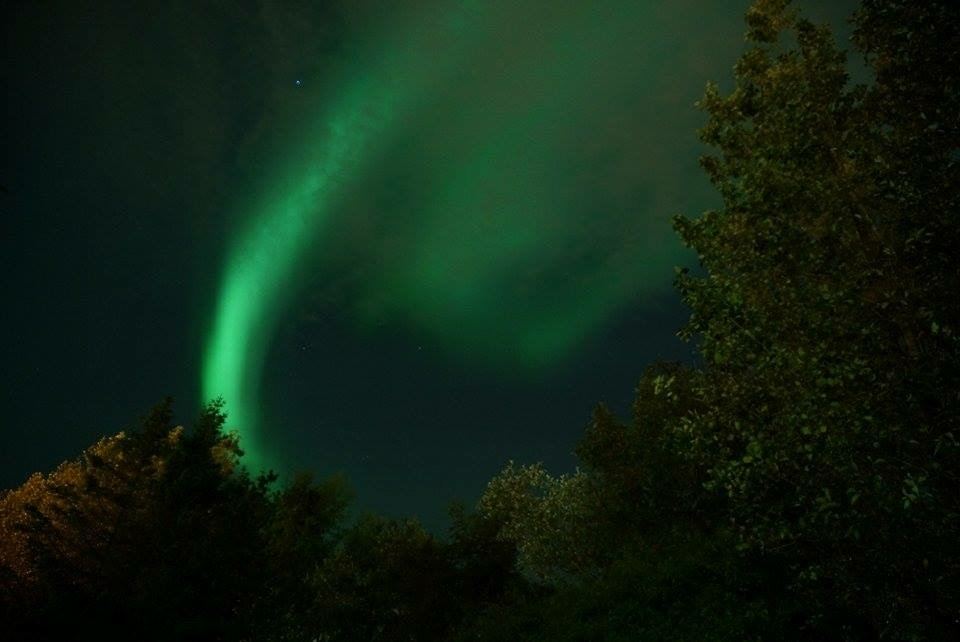
에스키피오르뒤르에서는 친구들과 함께 새벽에 밖으로 나가 오로라를 보았다.
너무 추워서 우리는 각자 이불을 둘둘 말고 밖에 서 있었다.
하늘에는 셀 수 없을 만큼 많은 별이 떠 있었고, 그 사이로 초록빛이 천천히 움직였다.
혼자 길을 걷다 처음 발견했던 오로라와, 여러 사람과 이불을 두른 채 바라본 오로라는 같은 하늘 아래의 일이었지만 전혀 다른 기억으로 남았다.
혼자 본 오로라는 발견의 기쁨이었고, 함께 본 오로라는 나눌 사람이 있다는 기쁨이었다.
워크캠프에는 스페인, 프랑스, 이탈리아, 벨기에, 크로아티아, 일본, 대만, 중국 등 여러 나라에서 온 사람들이 있었다.
처음에는 서로 어색했지만, 함께 일하고 밥을 만들고 여행하면서 조금씩 가까워졌다.
물론 서로 다른 문화권의 사람들이 함께 지낸다는 것이 즐거운 일만은 아니었다.
한 번은 프랑스에서 온 친구가 내게 눈을 찢는 제스처를 했다.
나는 그 행동이 무례하고 인종차별적이라고 분명하게 말했다. 그는 자신이 그런 의미인지 몰랐다며 바로 사과했다. 그리고 나중에도 다시 내 곁으로 와서 미안하다고 말했다.
그 행동은 분명 불쾌했지만, 변명하지 않고 사과했던 그의 태도 역시 오래 기억에 남아 있다.
누군가의 무지는 상처가 될 수 있고, 누군가는 그 자리에서 그것이 왜 잘못인지 설명해야 한다. 나 역시 그곳에서 불편한 순간에 침묵하지 않는 법을 조금씩 배우고 있었던 것 같다.
대만에서 온 자매는 그 일을 조금 다르게 받아들였다. 자신들의 눈은 그렇지 않다는 식으로 이야기했던 기억이 난다. 같은 아시아인이라도 경험과 반응은 모두 달랐다.
일본에서 온 친구는 영어를 거의 하지 못했다. 우리는 몇 개의 단어와 표정, 몸짓으로 대화했다. 부끄러움이 많고 착하고 귀여운 사람이었다.
완벽하게 말을 통하지 않아도 함께 웃고 하루를 보낼 수 있다는 것도 그때 배웠다.
그곳에서 만난 사람 중 가장 오래 남은 인연은 스페인에서 온 호르헤다.
처음에는 그 역시 밴 안에 앉아 있던 낯선 사람 중 한 명이었다.
하지만 우리는 조금씩 가까워졌다. 워크캠프가 끝난 뒤에도 연락을 이어갔고, 함께 영국을 여행했다. 이후에는 스페인에 있는 그의 집을 두 번 방문했고, 포르투갈과 산티아고, 마드리드와 루고 등 여러 장소에서 다시 만났다.
10년이 넘은 지금도 우리는 친한 친구로 남아 있다.
호르헤는 겸손하고 자신의 일을 성실하게 하며 다정한 사람이다.
아이슬란드로 향하던 그 조용한 밴 안에서 처음 만난 사람이 내 삶의 긴 시간을 함께할 친구가 될 줄은 몰랐다.
여행은 새로운 장소를 만나게 하지만, 때로는 앞으로의 삶에 들어올 사람을 미리 만나게 하기도 한다.
워크캠프의 마지막 날, 우리는 돌아가며 서로를 안았다.
우는 친구들도 많았다.
언젠가 다시 만날 수도 있지만, 그곳에서 인연이 끝난다면 다시는 보지 못할 수도 있었다.
며칠 전까지만 해도 밴 안에서 아무도 먼저 말을 하지 못했던 사람들이었다. 그런 사람들이 마지막에는 헤어지는 것이 아쉬워 서로를 껴안고 울고 있었다.
짧은 시간이었다.
하지만 함께 일하고, 먹고, 추워하고, 웃고, 어색해했던 시간은 생각보다 깊이 우리를 묶어 놓았다.
아일랜드로 돌아왔을 때는 다시 일상으로 돌아왔다는 안도감과 함께, 무언가를 많이 남겨두고 온 듯한 기분이 들었다.
곧바로 호르헤와 다시 만나기로 약속했고, 함께 영국 여행을 계획했다.
아이슬란드에서 끝난 줄 알았던 여행이 다른 관계와 다른 여행으로 계속 이어졌다.
2015년의 나는 지금보다 조금 더 모험적이고 자신감이 있었던 것 같다.
무언가를 먼저 제안하고, 낯선 상황에서도 일단 해보려는 힘이 있었다.
지금의 나는 그때보다 경제적으로 안정되었다. 좋은 숙소와 맛있는 음식도 여행에서 중요하게 생각한다. 대신 20일씩 긴 시간을 내어 몸이 힘든 워크캠프에 참여할 여유는 줄어들었다.
그때의 나는 편안함보다 경험을 선택했다.
좋은 호텔보다 폐교의 이층 침대를 선택했고, 훌륭한 식사보다 함께 만든 서툰 저녁을 선택했다. 정해진 관광 일정보다 낯선 사람들과 보내는 시간을 더 중요하게 생각했다.
그리고 그 선택들은 대부분 불편했지만, 이상하게도 오래 남았다.
많은 시간이 흐른 지금, 그때의 나에게 말해주고 싶다.
젊어서 가능했던 일이었다고만 생각하지 말자고.
젊음이 대단했던 것이 아니라, 네가 가지고 있던 열정과 모험적인 태도가 대단했던 것이라고.
익숙한 곳에 머무르지 않고 스스로를 먼 곳까지 데려간 용기가 자랑스럽다고.
아이슬란드를 다시 방문한다면 이번에는 직접 운전하며 조금 더 천천히 보고 싶다.
당시에는 워크캠프 장소로 이동하는 길과 돌아오는 길에 여러 관광지를 둘러보았지만, 다음에는 일정에 쫓기지 않고 한 장소에 오래 머물고 싶다.
에스키피오르뒤르의 수영장에도 다시 가보고 싶다.
그때의 산과 마을이 여전히 같은지, 따뜻한 물의 온도가 내 기억과 같은지 확인하고 싶다.
나는 이미 가본 곳에 다시 발자취를 남기는 일을 좋아한다.
같은 장소라도 나이가 달라지고, 삶이 달라지고, 함께하는 사람이 달라지면 공기와 감정은 전혀 다르게 느껴지기 때문이다.
아이슬란드 여행을 떠난 지 11년이 지났다.
장소의 정확한 순서와 사람들의 대화는 많이 흐려졌다.
그러나 어두운 도로를 달리던 밴, 진흙이 묻은 작업복, 폐교의 이층 침대, 실패한 오리 백숙, 따뜻한 야외 수영장, 이불을 둘둘 말고 바라보던 오로라, 마지막 날의 포옹은 아직 남아 있다.
그때 나는 아이슬란드를 여행한 것만이 아니었다.
낯선 사람들과 어울리는 법을 배웠고, 불편한 순간에 목소리를 내는 법을 익혔다. 내가 알던 세상보다 훨씬 넓은 세계가 있다는 사실을 몸으로 확인했다.
그리고 어쩌면 그 여행에서 나는 처음으로 나 자신에게 보여주고 있었는지도 모른다.
내가 생각했던 것보다 훨씬 더 멀리 갈 수 있는 사람이라는 것을.
────────────────────────────────────────
ENGLISH · 영어
What I Found in a Small Town at the Edge of the World
September 2015, Iceland
In September 2015, while studying English in Ireland, I traveled alone to Iceland during a school break.
It was both a journey and a work camp—a program in which people from many countries gathered in a small Icelandic town, helped with work that needed doing, and lived, ate, and slept together.
Looking back, it was a rather bold choice.
Paying money to travel to a strange country and work there—today I would first ask whether the accommodation was decent, whether the work would be too hard, and whether I could really share a room with strangers.
Back then, however, my curiosity was stronger than my hesitation.
I wanted to go somewhere new and place myself among unfamiliar people. More than anything, perhaps I wanted to discover how far I was capable of going.
That feeling carried me to Eskifjörður, a small town in eastern Iceland.
Strangely, I barely remember the airport where I first arrived. What remains instead is the dark, intense impression that seemed to cover the whole country.
Perhaps it was the short daylight, cloudy weather, or black volcanic terrain. Reykjavík was clean and quiet, yet it felt somehow empty. I had not expected a city full of high-rises and crowds, but its stillness was unlike any city I knew.
It was not that nobody was there; rather, the presence of other people seemed far away.
The van from Reykjavík to Eskifjörður was quiet too.
We had all just met. We came from different countries, and no one found it easy to speak first. Some watched the view; others closed their eyes. The awkwardness of strangers filled the van.
The scenery outside was as unfamiliar as the silence inside.
Black rocks and dark mountains, unmelted snow clinging to their slopes and summits, and barren land stretching without end.
It was a little frightening.
At the same time, it was magnificent.
It did not resemble the Earth I knew. I felt as though I were entering another planet. On that road, I thought for the first time: I have truly come far.
As I remember it, our work at the camp was planting grass.
It sounds simple, but it was demanding labor. We worked in coveralls joined to rubber boots, and by the end of the day our bodies were covered in sweat and mud. We were hot while working, then quickly cold as the sweat cooled.
Perhaps it was something I could do only because I was young.
If asked to do it again, I would probably think before I even began:
“I paid money to come all this way—and now I am going to work?”
We stayed in a small school building that no longer had students. A room that might once have been a classroom held rows of bunk beds, where people from different countries slept together.
At first, even remembering everyone’s name and country was difficult. But after working together each day, returning to wash, and preparing dinner, their faces and ways of speaking gradually became familiar.
I think we took turns cooking food from our countries.
I wanted to make Korean food, but ingredients were limited in that small Icelandic town. I tried to make something like baeksuk with frozen duck and ended up ruining it.
I must have been embarrassed then, but now the scene makes me laugh.
There I was in the kitchen of an abandoned school in a foreign country, boiling frozen duck because I wanted to serve Korean food to people from around the world.
Sometimes a failed meal lasts longer in memory than a perfect one.
Iceland was also extremely expensive.
We rarely ate out. Once, even a simple bowl of soup cost what I remember as about 30,000 Korean won. I had some savings, but for someone in their late twenties studying abroad, Iceland was hardly an easy destination.
That made time with people and encounters with nature more important than comfortable accommodation or famous food.
The place I remember most warmly in Eskifjörður is the local outdoor swimming pool.
It had swimming lanes, a slide for children, and a hot tub outside. All the water was warm.
I loved sitting in it, looking at the mountains and town while cold air surrounded me.
Perhaps it felt especially good after a day of working in the mud. Once I entered the warm water, not only the physical fatigue but also the lingering awkwardness between us seemed to dissolve.
It was not famous, nor did it have any extraordinary facility I would insist everyone visit. Yet even now, after so many years, I often think of that pool.
Only my face above the warm water, meeting the cold air.
That memory feels less like scenery I saw than a sensation stored inside my body.
Of course, the journey was not peaceful all the time.
We worked during the day, then returned to wash and prepare dinner. There was little time to do absolutely nothing.
Still, there were visits to the pool after work, meals cooked and shared with friends, and weekend drives to nearby places.
We visited Þingvellir National Park, the Geysir geothermal area, Gullfoss, Kerið crater, Seljalandsfoss, Sólheimajökull glacier, and the black beach of Reynisfjara.
I saw a glacier for the first time, walked a beach made of black stone, and watched hot water and steam rise from the earth.
Near the sea, the wind was strong enough to make standing upright difficult. Before waterfalls, the sound of water vibrated through the body. Facing such vast landscapes, we naturally spoke less.
“Beautiful” was not enough.
Icelandic nature did not seem to welcome people. It looked like a world that had existed perfectly well without us.
Standing there, I felt strangely at peace with being very small. My worries and plans became smaller for a while too.
My favorite place may have been Mývatn Nature Baths.
It was less crowded than the Blue Lagoon and felt more immersed in nature. The Blue Lagoon was not as hot as I had expected, so I actually felt cold, and considering the price, it did not leave a particularly strong impression.
At Mývatn, by contrast, I felt far more at ease.
I did not know it then, but I know now that fame does not determine the size of a memory.
A glacier was not the only thing I saw for the first time in Iceland.
I saw the aurora there for the first time as well.
While walking alone in Reykjavík, I remember asking someone passing on a bicycle—perhaps a German traveler—when I might see it. He told me that during that season it often appeared even above Reykjavík.
Then one day, while walking, I noticed a strange light in the sky.
“Is that the aurora?”
It was not the brilliant, vivid green I had seen in photographs. A faint light was slowly changing shape across the dark sky.
At the hostel, a traveler from Asia taught me how to photograph it, so I was able to keep several images.
In Eskifjörður, I went outside before dawn with my friends to watch it again.
It was so cold that each of us stood wrapped tightly in a blanket.
Countless stars filled the sky, and green light moved slowly between them.
The aurora I first discovered while walking alone and the one I watched with others beneath blankets happened under the same sky, yet became entirely different memories.
The aurora I saw alone held the joy of discovery. The aurora we watched together held the joy of having people with whom to share it.
The work camp included people from Spain, France, Italy, Belgium, Croatia, Japan, Taiwan, China, and elsewhere.
At first we were awkward with one another, but work, cooking, and travel gradually brought us closer.
Of course, living with people from different cultures was not always pleasant.
Once, a French participant pulled at the corners of his eyes in a gesture toward me.
I told him clearly that it was rude and racist. He said he had not understood its meaning and apologized immediately. Later, he came to me again to say he was sorry.
The gesture was unquestionably offensive, but his willingness to apologize without making excuses also stayed with me.
Another person’s ignorance can cause harm, and sometimes someone must explain, in that moment, why it is wrong. Perhaps I was also learning not to remain silent when something made me uncomfortable.
Two sisters from Taiwan reacted somewhat differently. I remember them saying that their own eyes did not look like that. Even among Asians, experiences and responses were not the same.
A friend from Japan spoke almost no English. We communicated with a few words, expressions, and gestures. She was shy, kind, and sweet.
I learned then that people can laugh together and share a day even without speaking perfectly.
The longest-lasting friendship from the camp was with Jorge from Spain.
At first, he too was only one of the strangers sitting in the van.
But little by little we became close. We stayed in touch after camp and traveled in the United Kingdom together. Later I visited his home in Spain twice, and we met again in Portugal, Santiago, Madrid, Lugo, and other places.
More than ten years later, we are still close friends.
Jorge is humble, conscientious in his work, and warmhearted.
I could never have known that someone I first met in that quiet van to Iceland would become a friend accompanying such a long stretch of my life.
Travel introduces us to new places, but sometimes it also introduces us in advance to people who will become part of our future.
On the last day of the camp, we went around embracing one another.
Many people cried.
We might meet again someday, but if our connection ended there, we might never see one another again.
Only days earlier, we had been the people in a van who could not bring themselves to speak first. Now we were hugging and crying because it hurt to leave.
It had been a short time.
Yet working, eating, shivering, laughing, and feeling awkward together had bound us more deeply than expected.
When I returned to Ireland, I felt the relief of coming back to daily life, along with the sense that I had left many things behind.
Jorge and I immediately promised to meet again and planned a trip through Britain.
The journey I thought had ended in Iceland continued through another relationship and other travels.
I think the person I was in 2015 was somewhat more adventurous and confident than I am now.
I had the energy to suggest things first and to try them even in unfamiliar situations.
Today I am more financially secure. Comfortable accommodation and good food matter more to me when I travel. But I have less freedom to spend twenty physically demanding days at a work camp.
Back then, I chose experience over comfort.
I chose a bunk bed in an abandoned school over a fine hotel, an imperfect shared dinner over an excellent meal, and time with strangers over a fixed sightseeing itinerary.
Most of those choices were uncomfortable, yet strangely, they are the ones that lasted.
After all these years, I want to tell my younger self something.
Do not dismiss it as something possible only because you were young.
What was remarkable was not youth itself, but the passion and adventurous spirit you carried.
Be proud of the courage that took you beyond the familiar and carried you so far.
If I return to Iceland, I would like to drive myself and see it more slowly.
During the camp, we visited attractions on the way to and from our town. Next time, I want to remain in each place without being chased by a schedule.
I would also like to return to the swimming pool in Eskifjörður.
I want to see whether the mountains and town are still the same, and whether the warmth of the water matches my memory.
I like leaving new footprints in places I have already visited.
Even in the same location, the air and emotions feel entirely different when our age, our life, and the person beside us have changed.
Eleven years have passed since that journey to Iceland.
The exact order of places and the words of conversations have faded.
Yet the van traveling along a dark road, mud-covered work clothes, bunk beds in an abandoned school, failed duck baeksuk, the warm outdoor pool, the aurora watched beneath tightly wrapped blankets, and the embraces of our final day all remain.
I did more than travel through Iceland.
I learned how to live among strangers and how to speak up in uncomfortable moments. I felt, in my body, that the world was far wider than the one I had known.
And perhaps, on that journey, I was showing myself something for the first time:
that I was capable of going much farther than I had imagined.
오늘의 기분 · 설렘


REPLIES & COMMENTS
이 글에 답글 남기기
아직 답글이 없습니다. 첫 번째 이야기를 남겨주세요.